
Managing employees involves more than maintaining a list of names and contact details. As businesses grow, they generate increasing amounts of employee-related information, including personal records, job details, department information, responsibilities, attendance and employment history.
When these details are maintained across separate spreadsheets, documents and multiple SaaS applications, accessing accurate information can become difficult. HR teams and managers may spend unnecessary time searching for records, updating information and coordinating employee management.
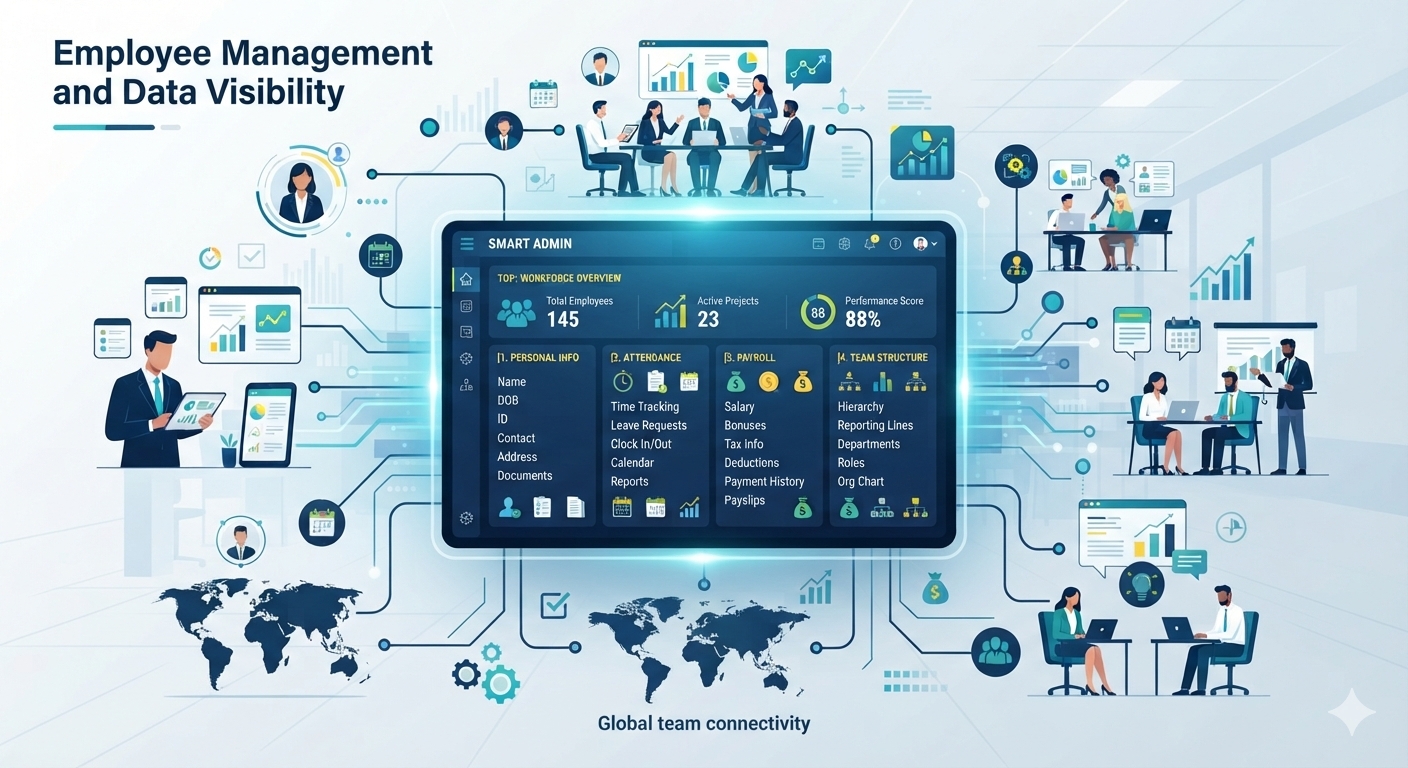
A structured employee management system helps businesses organize workforce information and maintain better visibility into their teams.
Importance of Organized Employee Information
Employee information is used across several business functions. HR teams need it for administration, managers require it for team coordination, and finance departments may need relevant details for payroll processing.
When information is scattered, businesses can experience challenges such as:
- Duplicate Records:Employee details may be maintained in multiple files, resulting in inconsistencies.
- Difficulty Accessing Information:Finding specific employee details can require searching through different documents.
- Inefficient Administration:Updating employee information across multiple records can consume additional time.
- Limited Team Visibility:Managers may struggle to access an organized view of employee details and responsibilities.
- Difficult Employee Handover:Changes in roles or responsibilities can make historical information harder to retrieve.
Keeping employee records organized helps create a more consistent approach to workforce administration.
What Employee Information Should Businesses Maintain?
The information required depends on the organization’s size and operations. However, businesses should consider maintaining the following details:
- Personal Information:Employee names, contact details and relevant identification records.
- Employment Details:Designation, joining date, employment status and department.
- Professional Information:Skills, qualifications, experience and assigned responsibilities.
- Organizational Details:Reporting managers, team structures and department associations.
- Attendance Information:Relevant working-hour and attendance records.
- Employment History:Important changes in roles, responsibilities and employment status.
Maintaining these details systematically makes employee information easier to access and manage.
How Smart Admin Helps Businesses Manage Employee Information
Smart Admin provides employee management capabilities that help businesses organize workforce records and connect employee information with everyday operational activities. Instead of maintaining employee details independently across multiple spreadsheets, and software, businesses can use a more structured management environment.
- Organizing Employee Records
Businesses can maintain employee information in an organized manner, making relevant details easier to retrieve and update when required.
- Maintaining Team Information
Employee records can support better visibility into team structures, employee details and organizational responsibilities.
- Connecting Employees with Daily Operations
Employee information becomes more useful when associated with operational activities. Smart Admin connects employee management with other business functions, including task management, project management and timesheets.
- Supporting Attendance and Time Tracking
Employee attendance and working hours are important operational records. Smart Admin’s time management capabilities help businesses record working hours and review attendance-related information.
- Connecting Employee Information with Payroll
Employee records are also relevant to payroll administration. Smart Admin provides payroll management capabilities that connect relevant employee, attendance and leave information with payroll activities.
- Supporting Leave Administration
Employee management also involves keeping track of employee availability. Smart Admin’s leave management capabilities help businesses manage leave requests, approvals and balances.
Together, these functions help businesses connect employee information with related workforce management activities. Thus, the connected management approach helps businesses reduce information gaps between departments and organize relevant employee activities more systematically.
What Should Businesses Look for in an Employee Management System?
Before selecting an employee management solution, businesses should consider whether it supports their operational requirements.
Important capabilities include:
- Centralized employee records
- Employee and department information
- Role and responsibility management
- Attendance and working-hour tracking
- Leave administration
- Payroll-related information
- Employee access controls
- Easy record updates and retrieval
The objective should be to maintain reliable employee information while connecting it with the processes that depend on it.
Final Thoughts
Employees are an essential part of every business, and managing their information effectively supports smoother daily operations.
When employee records are organized and connected with attendance, leave, tasks, projects and payroll, businesses can maintain better visibility into their workforce.
Smart Admin helps businesses bring these related workforce management activities into an integrated environment, making employee administration more structured as teams grow.
SMART ADMIN is a comprehensive SaaS-based office automation platform that unifies employee management, client management, attendance tracking, payroll, lead management, daily scheduling, communication management, ticketing, project management, task tracking, invoicing, and payment processing within a single system. Designed for organizations of all sizes, it streamlines business operations through integrated modules for payroll management, timesheets, lead tracking, invoicing, and project monitoring. SMART ADMIN for FREE Trial and Registration.