
The Indian automobile industry, historically built on the backbone of internal combustion engine (ICE) vehicles, is undergoing a profound structural transformation. The rapid advancement of electric mobility over the last decade has not only introduced new technologies but also redefined the contours of industrial growth, employment, investment, and sustainability in India. Electric vehicles (EVs) have transitioned from being an experimental innovation to a mainstream industrial force that now drives policy priorities, manufacturing strategies, and consumer preferences alike.
Evolution of Electric Mobility in India
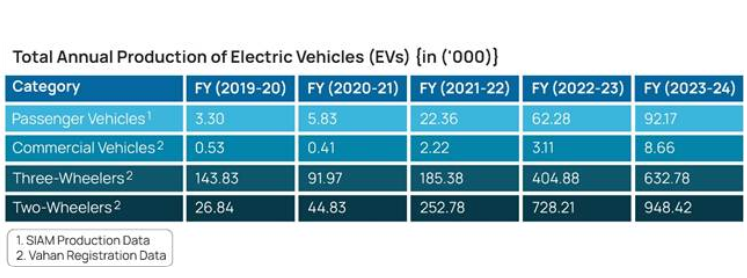
India’s journey toward electric mobility has been remarkable in both scale and speed. According to data from the Society of Indian Automobile Manufacturers (SIAM), the total EV registrations in the country increased from around 123,000 units in FY 2019–20 to nearly 16 lakhs units in FY 2024–25 to 25.5 lakhs units in FY 2025- 26, registering an impressive compound annual growth rate (CAGR) of nearly 66%. This growth has been broad-based across multiple vehicle segments. Electric two-wheelers account for about 60–65% of total EV sales, led by companies such as Ola Electric, Ather Energy, and TVS Motor. Electric three-wheelers—used extensively for last-mile connectivity and commercial transport—make up nearly 30% of the market, while electric passenger vehicles (e-PVs) have shown steady growth, primarily driven by Tata Motors, which commands over 70% market share in this category.
This pattern of adoption demonstrates that India’s electric mobility movement is not restricted to high-end vehicles or niche urban markets. Instead, it has become a multi-segment phenomenon addressing both consumer and commercial transportation needs.
Economic and Industrial Impact
- Expansion of Manufacturing Ecosystem
The automobile sector contributes nearly 6% of India’s GDP and supports over 35 million jobs, according to market research reports. The transition to EVs is expanding the industrial ecosystem through demand for advanced manufacturing, battery technologies, and digital solutions. Major automakers such as Tata Motors and Mahindra Electric have established dedicated EV facilities, while startups like Ola Electric and Simple Energy are investing in gigafactories, supporting the Make in India and Atmanirbhar Bharat initiatives.
- Investment and Industrial Linkages
Over ₹1.5 lakh crore was invested in India’s EV ecosystem between 2020 and 2025, accelerating growth in manufacturing, battery production, charging infrastructure, and innovation. Investments from major industrial groups and integration with renewable energy, electronics, and software sectors are strengthening India’s clean mobility ecosystem.
- Policy Framework Driving EV Adoption
Government initiatives such as FAME/FAME-II and the PLI schemes for automobiles and ACC batteries have been instrumental in accelerating EV adoption, charging infrastructure development, and domestic manufacturing. State-level incentives offered by Delhi, Maharashtra, Tamil Nadu, Gujarat, and Karnataka have further reduced cost barriers and strengthened investor confidence, according to market intelligence.
- Charging Infrastructure: The Foundation for Scale
India’s public charging infrastructure expanded from fewer than 500 stations in 2018 to over 12,000 by 2025, supported by government initiatives and private-sector investments. Companies such as Tata Power, Statiq, and BPCL have built extensive charging networks, while highway fast-charging projects are helping reduce range anxiety.
The availability of workplace, residential, and public chargers is gradually transforming consumer perception—making electric vehicles more practical for everyday use.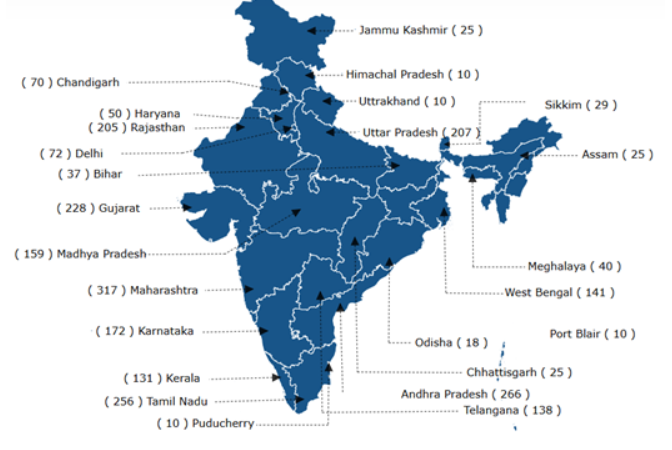
- Private Sector and Startup Participation
Private-sector innovation has been a key driver of India’s EV growth. Companies such as Ola Electric, Ather Energy, and Tata Motors have accelerated technological advancement, expanded production capacity, and popularized connected EV solutions, fostering innovation, localized supply chains, and greater affordability.
- Environmental and Social Impact
The EV transition is delivering environmental and economic benefits by reducing emissions, improving air quality, lowering oil dependence, and supporting India’s Net Zero 2070 goals. It is also creating green jobs across manufacturing, maintenance, and recycling, supported by workforce reskilling initiatives.
Challenges and the Path Forward
Despite rapid growth, several challenges persist. India continues to rely heavily on imported lithium-ion cells, with nearly 70% of components sourced from China and South Korea. High battery costs continue to make EVs 20–30% more expensive than comparable ICE vehicles. Charging networks remain uneven, particularly across smaller towns and rural regions. Battery recycling and second-life applications are emerging as new policy frontiers. Sustainable disposal and reuse frameworks will be critical to managing the environmental footprint of large-scale battery deployment.
Addressing these issues requires continued investment in domestic R&D, policy harmonization, and the creation of localized supply chains to enhance self-reliance.
The Road Ahead: India’s Electric Vision 2030
India’s National Electric Mobility Mission Plan (NEMMP) envisions achieving 30% EV penetration by 2030. Meeting this goal could yield transformative outcomes—saving up to USD 60 billion annually in oil imports, preventing 250 million tonnes of CO₂ emissions, and creating an estimated 10 million new jobs across the value chain.
As battery technologies evolve and costs decline by an estimated 40–50% by 2030, the total cost of ownership for EVs is expected to reach parity with conventional vehicles. This milestone will mark a decisive turning point, enable mass adoption and cementing India’s position as one of the world’s leading EV markets.